
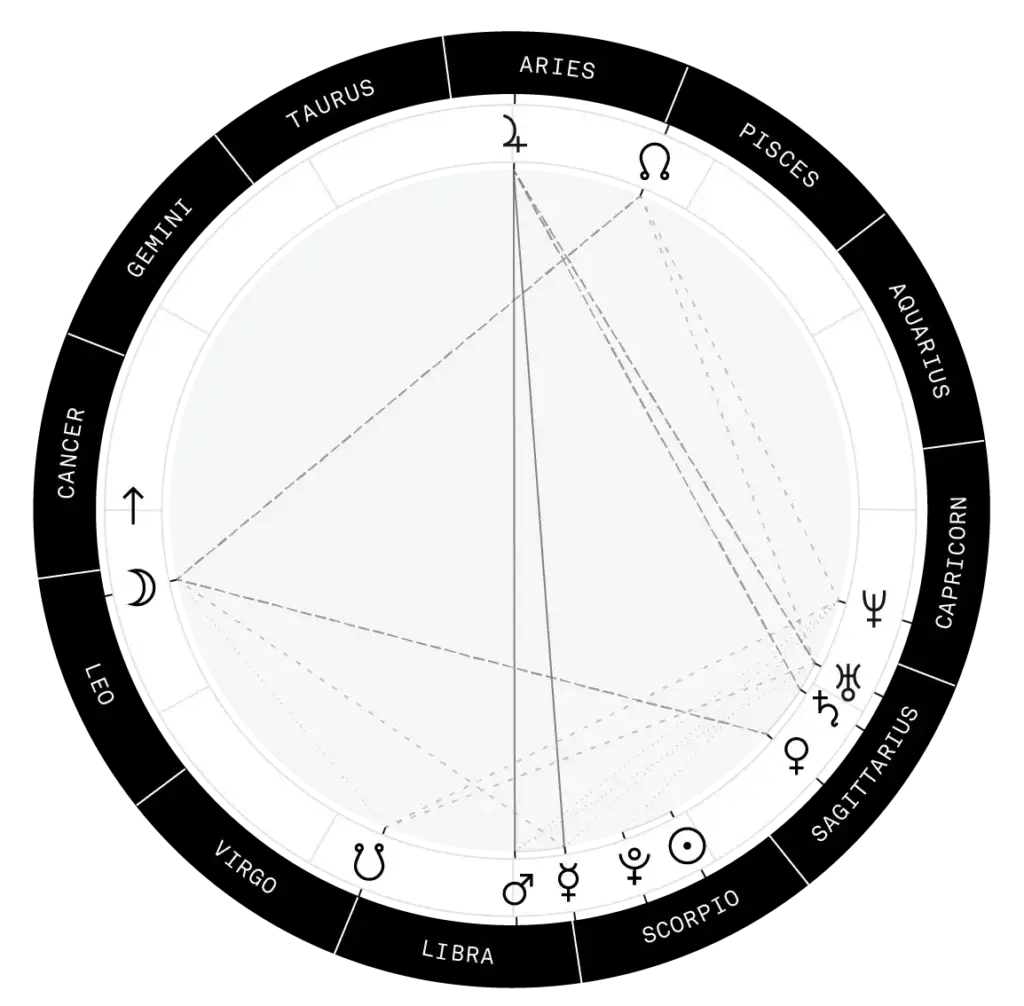
How to Verify an Accurate Birth Chart or Rectify Your Birth Time With an Astrologer
A birth chart result usually looks wrong because the input or method settings differ, not because the reading itself changed. The first checks should cover the birth date, birth time, location, zodiac type, and house system.
What Causes Wrong Results in a Birth Chart tool?
Most mismatches come from four checks: incorrect birth data, a different house system, different aspect settings, or a different calculation choice for points such as the point or Black Moon Lilith.
| What looks wrong | Most likely cause | Best first check |
| Rising sign or ascendant differs | Birth time changed or got rounded | Check the exact recorded minute and time zone |
| Planets fall in different houses | Different house system | Match Placidus, Whole Sign, or the chosen system |
| An aspect appears or disappears | Different orb setting | Compare the orb used for that aspect |
| Node or Black Moon Lilith moves | Mean versus true method | Match the point method |
Astrology software can also expose these differences clearly. A free tool may let the reader change house, aspect, and point settings, so two results can disagree while both use the same underlying birth data.
For a broader accuracy check, see the Accuracy Guide.
Why Do My Houses Look Off, or Are Planets in Different Houses?
Different sector placements usually come from different house systems. A planet can keep the same zodiac sign while its house placement changes because each system divides the reading differently.
Placidus uses a time based division of the sky, while Whole Sign assigns one zodiac sign to each house. Swiss astronomical documentation lists Placidus as a time based house system and notes calculation limits near the polar circles. Swiss house system guide.
Neither setting automatically makes the natal chart wrong. The useful comparison asks whether the two tools use the same house method before comparing house placements.
Why Does an Aspect in the reading Appear to Be Wrong?
A missing aspect often comes from a different orb, the degree range a tool allows before it stops counting two planets as related. A tighter orb can exclude an aspect that a wider orb includes, so the same planetary positions can produce different aspect lists.
The reader should compare the same aspect, the same orb rule, and the same zodiac type before treating a difference as a method error.
Why Are the Moon, point, or Black Moon Lilith Placements Different?
The Moon can move noticeably in a short period, so an incorrect birth date or rough birth time can affect its reported placement. For the point, a tool can use a mean point or true point, while Black Moon Lilith can also appear in different versions.
The best check compares the method used by both tools rather than choosing the result that looks more familiar.
What Information Is Needed for an Accurate Result?
An accurate reading needs the birth date, birth time, and birth location, including the city and country. The date anchors the planetary positions, while the time and location matter most for the rising sign, ascendant, houses, and cusp positions.
The location check matters because a city name can refer to different places. The tool also needs the correct local time and time zone context for the recorded moment.
For the astronomical side of the method, JPL’s Horizons service provides high precision ephemerides for solar system bodies. NASA JPL Horizons.
Do Different House Systems or Astrological Traditions Produce Different Birth Charts?
Yes. Different house systems can change house placements, and different zodiac traditions can change sign labels. A comparison stays useful only when the tools use the same zodiac type and house method.
The reader should also check whether the reading follows a Western or sidereal framework before comparing placements. That setting can affect how the astrological practice reading labels the zodiac.
A separate Sun, Moon, and Rising Sign tool can help readers verify the three most discussed points in a natal chart.
How to Verify Results from a Chart Tool
The simplest verification method uses the same data in two independent calculators and matches their settings before comparing results. The comparison should start with the Sun and Moon, then move to the ascendant, houses, aspects, and other points.
- Enter the same date, birth time, and location exactly as recorded.
- Match the zodiac type and house system before comparing houses.
- Compare the Sun and Moon first, then check the rising point and house cusps.
- Compare aspect orbs and point settings before treating an aspect or point as wrong.
A good cross check uses transparent settings and a traceable data source. The tool should show enough detail for the reader to see why a placement or house appears.
For readers checking a reading from scratch, the birth reading tool should use the same birth data throughout the verification process.
What Are the Most Accurate Astrology Apps or Online Tools?
No single app can claim universal accuracy without stating its method and data source. A better standard is transparency: the app or software should state its zodiac type, house system, point calculations, and enough settings to reproduce the result.
JPL provides a strong astronomy reference for planetary positions, while astrological practice software adds the zodiac, house, aspect, and other conventions used to build a birth based reading. Those layers should not get mixed together.
How to Know If an Astrology App Is Doing Real Astrology
An astrology app becomes easier to assess when it shows the actual reading factors behind its interpretation. A reader should be able to connect a statement to a placement, aspect, sector, or timing method.
- The app identifies its sector system and zodiac type.
- The interpretation points to specific placements instead of only giving generic horoscope text.
- The app exposes enough reading detail to check the stated position.
- Timing features clearly identify the transit or other technique being used.
That approach gives the program a practical test: a reader can trace the claim back to the birth based reading instead of accepting a personality statement without evidence.
How to Rectify a Birth Chart and Find the Correct Birth Time
Chart rectification estimates an uncertain recorded time by testing candidate times against dated life events. The process matters most when the original birth record is missing, approximate, or clearly unreliable.
Patrick Watson describes rectification as “an exercise; it’s not an authority.”
Source: Episode 169 transcript
The Astrology Podcast’s episode on rectification describes the practice as a procedure for finding a recorded time when the original time is unknown or uncertain. The same discussion stresses that rectification remains speculative, so readers should treat it with caution.
| Technique | What it tests | Useful input |
| Transits to angles | Checks notable transits against the rising point or midheaven | A narrow time window and dated events |
| Solar arcs | Tests symbolic degree movement against major events | Confirmed event dates |
| Primary directions | Uses a traditional timing method tied to daily motion | A candidate recorded time |
| Progressed lunar body | Compares the lunar body’s symbolic movement with events | A workable starting chart |
| Annual profections | Activates one sector each year | Birth date and dated life events |
A careful rectification also benefits from a spread of dated events rather than a cluster from one short period. A useful record can include major moves, marriage, career changes, education milestones, or other clearly dated turning points.
The Hellenistic tradition provides several timing techniques, but rectification should not overwrite a documented recorded time merely because a chart feels easier to interpret after a change. A recorded time remains important evidence.
An astrologer may also test a chart ruler, Jupiter, Saturn, Chiron, and sign specific factors such as Leo when those points matter to the chosen technique.
What Should Someone Do If the Exact recorded time Is Unknown?
A natal reading can still show many astronomical placements without an exact recorded time, but the rising sign and houses need more caution. The reader can work with the known date, mark time sensitive points as uncertain, and search for a birth record before choosing to rectify the reading.
See the guide to reading a chart without an exact recorded time for a step by step approach.
Can AI or ChatGPT Accurately Interpret a birth based reading?
AI can explain astrology terms and discuss a supplied reading, but a reliable position method still depends on astronomical data and the settings used to convert that data into a birth based reading. JPL explains that Horizons provides calculated positions and astronomical data for solar system objects. JPL astronomical data.
A practical workflow therefore uses a real tool or ephemeris source for the numbers and an AI tool for explanation, comparison, or plain language interpretation.
Does a birth based reading stay the same over time?
The birth moment stays fixed, so the birth based reading does not change when the same correct data and settings produce the reading. What can change is the information or method used to calculate it.
| Situation | Best response |
| Wrong date, time, or location entered | Correct the input and run the tool again |
| Two tools use different settings | Match the zodiac and sector system, then compare again |
| No exact recorded time exists | Use the known data and consider rectification when justified |
| The reading stayed the same but the interpretation changed | Treat it as a change in reading, not a new reading |
Is Astrology Supported by Scientific Evidence?
Astronomers can measure astronomical positions, but measurement alone does not establish astrology as a predictive science. A well known double blind test published in Nature evaluated whether birth based charts could accurately describe personality traits. Nature: A double blind test of astrology.
The safest editorial distinction is between two questions: whether a tool reproduces the selected astronomical and astrological conventions consistently, and whether astrological practice’s interpretations or predictions have scientific validity. The first question concerns method; the second concerns evidence.
Frequently Asked Questions
How can a chart be rectified or corrected?
Rectification estimates an uncertain recorded time by testing candidate times against dated life events. A documented recorded time should remain the starting reference whenever one exists.
What factors affect the accuracy of a chart tool?
The key inputs include the birth date, recorded time, birth location, time zone, zodiac type, sector system, and other method settings such as aspect or node rules.
What’s the most reliable chart website or app?
No single app can claim universal accuracy without defining its settings and data source. A transparent tool that exposes its method gives the reader a better basis for comparison.
How should a reader respond to an unknown recorded time?
The reader can calculate the placements that remain stable from the known date, treat houses and the rising sign as uncertain, and investigate the original birth record before rectification.
Can ChatGPT interpret a natal reading?
AI can explain a provided reading, but a dedicated tool or astronomical data source should supply the position method and expose its settings.
How can a reader identify whether results are wrong?
Run the same birth data through a second tool, match the zodiac and sector system, and compare the Sun, lunar body, rising point, houses, aspects, and point settings.
Do different sector systems produce different birth charts?
They can change sector placements while leaving a planet’s zodiac position unchanged. The reader should compare like with like.
What information is needed to generate a reliable chart?
The tool needs the correct birth date, recorded time, and birth location, plus consistent settings for zodiac, houses, and other method choices.
Does a birth based reading stay permanent, or can it change over time?
The birth moment remains fixed. A different result means the input data or method settings changed.
Is it possible to prove astrology wrong?
Scientific tests can evaluate specific claims, but a tool’s ability to reproduce a chosen chart raises a different question from whether those interpretations predict real world outcomes.
Key Takeaway
The first fix for a wrong looking chart is a settings audit, not a guess. The reader should verify the birth date, recorded time, location, zodiac type, sector system, and aspect settings in the same order across tools. When the recorded time remains uncertain, chart rectification can provide a candidate time, but the reader should label it as an estimate rather than a documented fact.